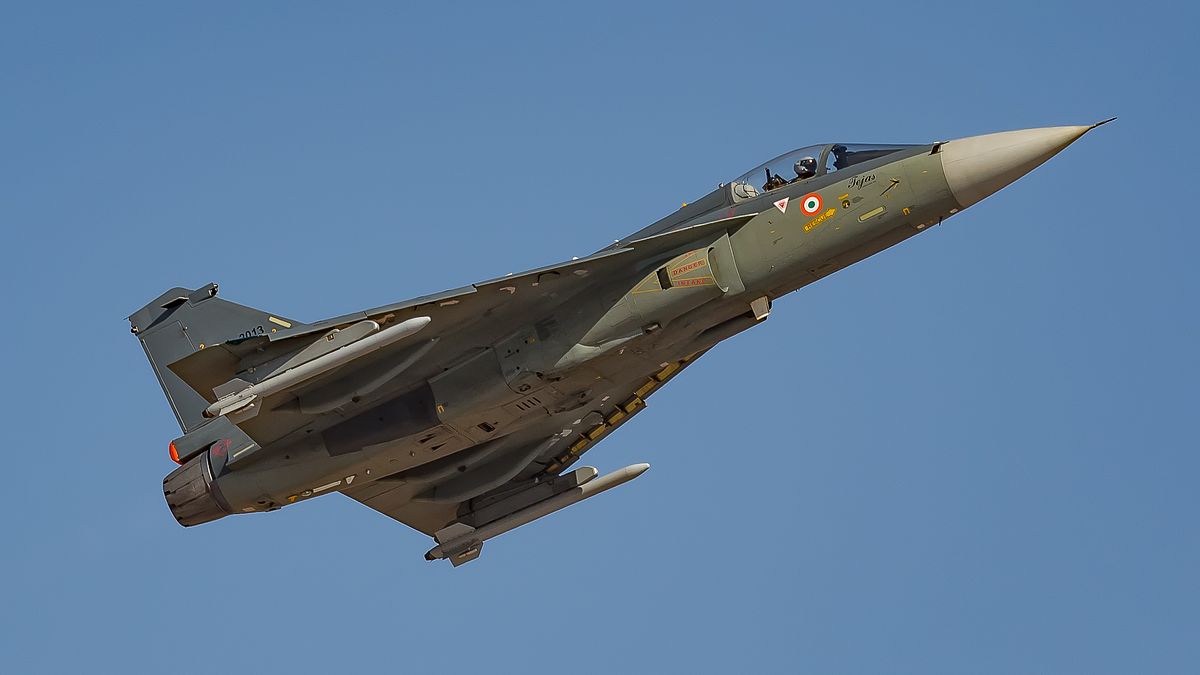
Two projects that I have worked on got the visibility of Dr. APJ Abdul Kalam, President of India (2002-2007). One of those projects was about the development of a robotic ultrasound scanning system that was used to scan the composite wing skin of a fighter aircraft that was being designed.
My team came into the project late… it had been going for years. We had one job – make it work – we had 6 months to do so. There were three parties here: CAIR (center for artificial intelligence and robotics), a hardware design company, and my startup doing the embedded system software.
This was a huge robotic structure (5 axis arm) with a travel range of 7 meters by 5 meters. The tip of the robotic arm had a water jet, and the ultrasonic sensor assembly was behind it. The data acquisition system was running over cabling that was over 75 feet long. The Electro-magnetic interference from the motors was huge. The hardware problem was about how to reduce the noise in the system and get a coherent signal.
The concept was simple. Sound travels through air at 340 meters per second, through water at 1500 meters per second, and through solids at approx. 5000 meters per second. Every time there is a transition from solid to air, or vice versa, there is a reflection of some of the sound waves.
The scan for a single point was from an ADC with 4k samples per second at a 16 bit resolution. The trigger was time, the first blip (reflection) in the signal was how long it took through water, and if everything was solid we would get a second blip when the signal transitioned from solid to air (below the sample). With this data we could figure out distance of the sensor from the sample being tested (important to know if we should trust the signal) and the thickness of the sample. If there was an air bubble (or any kind of defect) we would get additional blips. But more often than not, the signal after the air bubble would be lost.
With this data we would build up a thickness/defect map of the entire aircraft wing. Remember that this was a large system, so to actually scan the wing it would take 8 hours+. Monotonous as hell. Thankfully, most of the development time was with a much smaller sample.
Four months of work and we had our first scan; one that the technical committee analyzed and concluded that it met the criteria for testing. We were able to differentiate between a known good sample and a known bad sample (with defects). We were also able to pass a blind test where we had no idea about the quality of the sample.
For the team working on the project, it was just a project. It was only when Dr. Kalam came to see it did we find out that this made India the 6th country in the world to have such a manufacturing and scanning system to build and test composite aircraft parts.
It is really hard to put months of toil into a one page description of what it did. The reality is that while working on the project we did not work on being 6th in the world, nor did we think about making an aircraft fly. We just wanted that damn thing to work.
We would run the robot, gather scan data, and then stand around and talk. Was the robotic arm moving smoothly? Could we validate the movement and speed? What was the noise level in the signal when the robot was running, and when it was not? Essentially it was a group of engineers talking about the problem, cursing the managers who were far away, getting out of there by 4pm because of the factory shift change, going back to our office, working late making changes/modifications, and getting back to the factory at 8am the next day morning to test again.
I remember the glee that we felt the first time that it worked. It was on a sample that was about 12 inches by 6 inches sample with 4 known defects. We tuned the distance calculations (different colors for different distances) and those defects came into glorious, color coded view…
So why am I writing this…over 20 years after the fact? It’s to highlight that for us that was not a huge robot we were working on, it was a printer head of a really large printer/plotter, the ultrasound system was just a data acquisition system, and the task was getting these two components to work together without getting affected by the noise in the overall system… unless there is a framework to describe/understand what you are working on, you will get lost in the magnitude of the solution you are trying to build. If what you build works as designed, and everybody else’s piece works as defined, the system will work. It’s being able to discuss openly all parts of a system, that will get the system working in the first place.
I’ve never really hit a big problem in my working life; its only the small problems that needed to be solved. The real work is in making sure that there aren’t any small problems left that still need to be solved.
Dr. APJ Abdul Kalam became the President of India in 2002.
The Light Combat Aircraft – Tejas entered service in the Indian Air Force on July 1st 2016.
 Samyeer Metrani