Solving a problem, or alleviating pain for a user give’s the most pleasure. The simpler the solution the more the pleasure. That is what you think back and go…damn that was cool. It helps even more when that simple product sold thousands…
In 1995 I was asked to help somebody with a small project. The problem statement was simple. How can you make the work of a Medical Transcription data entry operator simple. The data entry operator needed to listen to listen to a recording and transcribe it into english text. So while the recording was playing the data entry operator would pause audio, rewind a bit, play it again…and repeat while they went through the recording. Most recordings would be between 5 minutes to an hour, and going back and forth through the recording usually meant that it took 2-3x the time to complete the transcription. With the most frustrating part, pressing alt tab to with to the media player, pausing the audio, rewinding, pressing play again, switching to word (or designated editor) and continuing. Sure now there is speech recognition and a lot of that is being done by AI, but remember that this was 1995 (over 20 years ago).
Interestingly (and this is an indicator of the complexity of technology today) this simplicity is no longer possible today.
The solution we came up with…all sound cards came with a Joystick controller. Not only one joystick controller but two joystick controllers. A 15 pin connector that had two sets of Analog controls (X and Y axis) and two sets of fire controls.
Remember again that this was a time before the internet (if you can remember that far), so you had two sources of information, books, friends to talk to. But the Sound blaster had only recently been introduced so documentation was not so easy to find.
I have always been one to experiment with hardware…did you know that when you put an EPROM into an x86 motherboard upside down its insides exploded with a bright purple flame (circa 1990)…maybe that’s another blog post…
So with no documentation and nobody to ask, the question was how does the joystick work. Start a PC game…plug in wires into the 15 pin connector…and go about figuring out if I can get the fire button to trigger something in the game. Figured out that with some creative mix and match I have found the four fire buttons. Pulling the fire pin to ground was what was needed to trigger this. All this without knowing what a multimeter was. What kind of an embedded systems programmer was I?
Once we had that figured out, that was it…
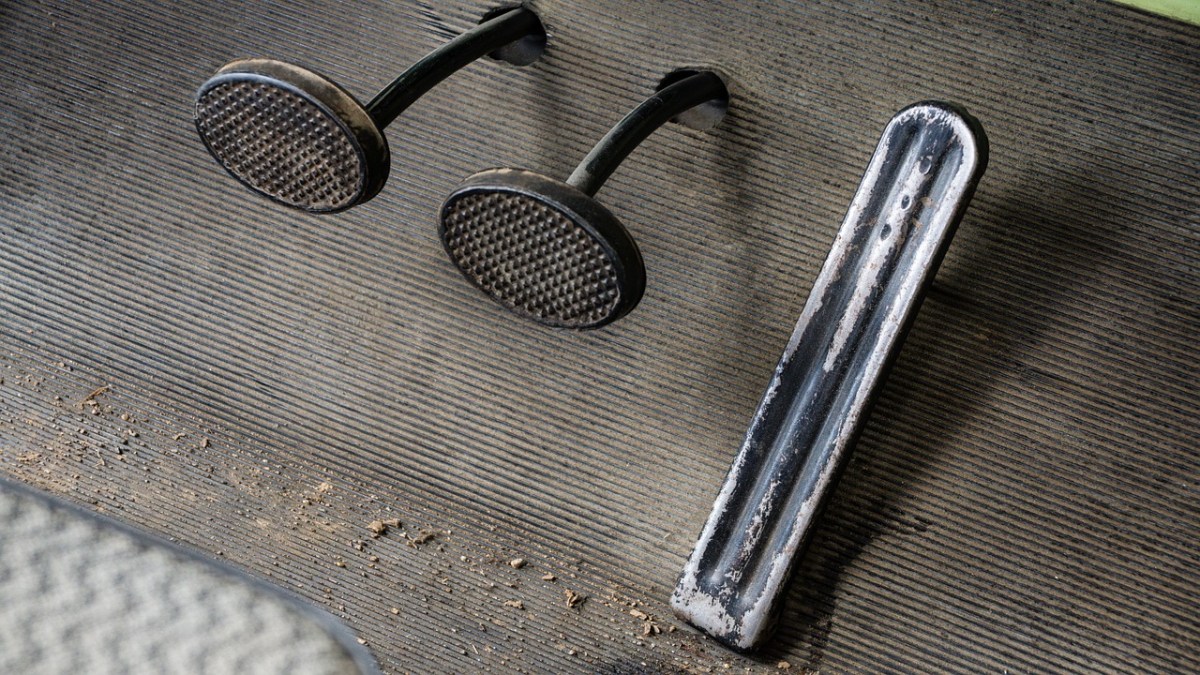
Three industrial grade push button switches. Stick them onto the footplate (ok a little more “design” than simply superglue). Solder wires to a 15 pin connector and the hardware is ready.
Software was a piece of cake. A delphi (Pascal) application that attached itself to the top title bar of the foreground application (windows 3.1) the application would allow selecting the audio file to play. The footplate was below the desk. Center button pause/play. Left button rewind (while you hold it) right button fast-forward.
The data entry operators loved it. They did not have a complex fwd, rewind process. Direct productivity improvement. Their hands did not stray from the keyboard.
Total time worked for this, approx 2 weeks. Handed it off to my partner who took care of getting production done. Awesome…
Which brings me to the complexity today…it is impossible to interface something like that to the PC today. And if I wanted to do that today, I would need a micro controller, power supply (USB?). Not difficult…but not deceptively simple.
Simple solutions that work are so much fun!
 Samyeer Metrani